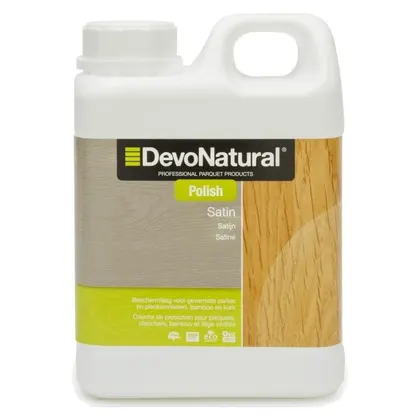

Oil, lacquer or hardwax oil: how to finish parquet
The differences between oil, lacquer and hardwax oil, which finish suits your use and how to finish an unfinished or freshly sanded floor.
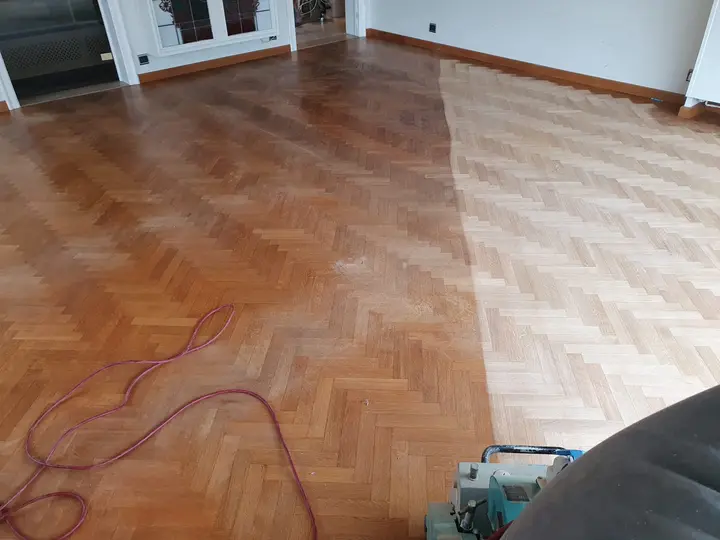
An unfinished floor, or one that has just been sanded, needs a finish. It protects the wood against dirt, moisture and wear and has a big say in colour and appearance. There are many brands and products, but they come down to three families: oil, lacquer (also called varnish) and hardwax oil. Each has its own character and its own maintenance.
Oil: natural and locally repairable
Floor oil penetrates the wood and hardens in the fibres. No thick layer forms on top: you can still see and feel the wood. Oil comes in natural, white and a range of colours.
- Pros: a warm, natural look. Scratches and worn spots can be touched up locally without sanding the whole floor.
- Points to note: needs regular care with a suitable soap and an occasional refresh with maintenance oil. In the first weeks, while the oil cures, the floor is more prone to stains.
- Best for: living rooms, bedrooms and anyone who wants a natural-looking floor and does not mind the upkeep.
Lacquer: a strong protective layer
Lacquer forms a clear film on the wood. Modern water-based floor lacquers, often polyurethane based, are hard-wearing, yellow very little and are available from extra matt to high gloss.
- Pros: very resistant to stains and wear, easy everyday cleaning.
- Points to note: deep scratches or areas worn through are hard to repair locally. Over time a whole room needs relacquering, possibly after sanding.
- Best for: busy rooms, kitchens, offices and households with children or pets.
Hardwax oil: the middle ground
Hardwax oil combines oils with hard waxes. The oil soaks into the wood, while the wax forms a thin protective layer on the surface. The result looks natural, like oil, but is a little more resistant to moisture and dirt. Repairs can usually be done locally.
Traditional wax without oil is rarely used on floors any more. It needs a lot of maintenance and can cause problems if you later want to lacquer.
Which finish should you choose?
- Want as little maintenance and as much protection as possible? Choose lacquer.
- Want a natural floor you can touch up yourself? Choose oil or hardwax oil.
- Unsure about colour? Have a sample made on an offcut from the same batch. Colour and sheen vary by species.
- Bought a floor supplied unfinished? Check whether it has already had a pre-treatment before choosing a product.
Oiling a floor, in outline
- Sand the floor evenly to the final grit recommended by the oil manufacturer. Too fine a grit can reduce how much oil the wood takes up.
- Vacuum thoroughly, including the joints and along the skirting.
- Apply the oil thinly with a spatula, roller or brush and work it in with a pad, possibly with a floor buffer.
- After the specified time, remove all oil that has not been absorbed. Oil left on the surface dries sticky.
- Apply a second coat if needed, following the instructions.
- Let the floor cure. Walk on it gently for the first days and wait the period stated by the manufacturer before putting down rugs or wet cleaning.
Lacquering a floor, in outline
- Sand the floor evenly and vacuum very thoroughly. Every speck of dust will show under the lacquer.
- Apply a base coat if the system calls for one. Among other things, it reduces boards sticking together at the edges.
- Then apply usually two top coats, in thin even layers.
- Lightly sand between coats with a fine grit if the manufacturer requires it, and remove the dust.
- Do not lacquer when it is too hot or too cold, and ventilate without creating draughts.
- The floor can be walked on after a few hours, but the lacquer only reaches full hardness after about a week. Wait until then for rugs and heavy furniture.
Safety: take care with oily rags
Rags, pads and paper soaked with drying oil can catch fire spontaneously as they cure. After use, spread them out flat outdoors to dry, or keep them in a closed metal tin filled with water until you can dispose of them safely. Never throw them crumpled into a bin.
Do not mix systems
Use maintenance products that match your finish. Lacquer cannot go over oil or wax without fully sanding first, and soap for oiled floors is not meant for lacquered ones. The webshop carries floor oils, lacquers and the matching care products. Would you like your floor sanded and finished? Janssen Parketvloeren sands floors and finishes them in oil or lacquer.