
Polishing a lacquered floor and refreshing an oiled one
Polish for lacquered floors and maintenance oil for oiled floors: when, how often and how to apply them, and when sanding is needed.
Even with good everyday care, a floor gets duller over time, especially along walkways, in front of the sofa and around the table. You do not have to sand straight away. The right refresh restores the protective layer and the look of the floor. Which method you use depends entirely on the finish: polish is for lacquer, maintenance oil is for oil.
Do you know which finish your floor has?
If you are not sure, do a simple test in an inconspicuous spot. Leave a drop of water on the floor. If it beads up for a long time on a smooth, closed surface, the floor is probably lacquered. If it soaks in after a while or darkens the wood, it is most likely oiled. When in doubt, ask whoever laid or finished the floor.
Polish for lacquered floors
Polish is a liquid care product that puts a thin protective layer over the existing lacquer. It fills micro-scratches, evens out the sheen and takes some of the wear instead of the lacquer itself. The lacquer stays intact. That is the big difference with relacquering, where the existing lacquer is sanded and a new coat is applied.
Applying polish, step by step
- Vacuum or dust the floor thoroughly, corners included.
- Clean with a cleaner for lacquered floors and let it dry completely. Polish over dirt seals the dirt in.
- Choose a polish with the right sheen. Use a matt polish on a matt floor, otherwise you will get shiny patches.
- Test first in an inconspicuous spot, for example inside a cupboard or behind a door.
- Apply the polish thinly and evenly with a flat applicator or a clean pad, along the boards. Work from the far corner towards the door so you do not trap yourself.
- Let it dry as stated on the pack before walking on it. Wait a little longer for furniture and rugs.
How often should you polish?
There is no fixed rule. In a busy kitchen or hallway a few times a year can make sense, in a bedroom far less. Polish when the floor turns dull and cleaning no longer helps. Polishing too often without proper cleaning in between can eventually leave a sticky or patchy build-up. Remove it with a polish remover and then apply a fresh thin coat.
Never use polish on an oiled floor
Polish forms a film. On an oiled floor it stays on the surface instead of soaking into the wood. The wood can no longer be nourished, the floor takes on a plastic look and oil applied later will not bond. The only way to remove that layer is to sand.
Refreshing an oiled floor
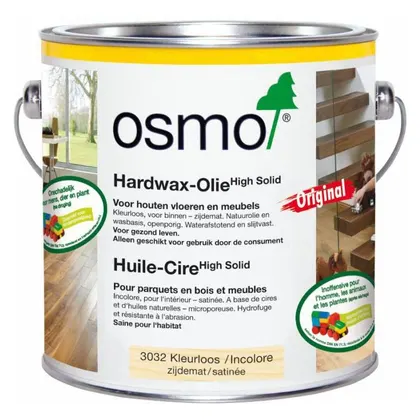
An oiled floor is cared for with soap for oiled floors. It cleans and leaves a little protection behind each time. When the floor looks dry, pale or dull, or stains soak in more quickly, it is time for maintenance oil or a refresher for oiled floors.
- Clean the floor thoroughly with an intensive cleaner for oiled floors and let it dry completely.
- Apply a thin coat of maintenance oil with a pad or cloth, only on worn areas if that is enough.
- Work the oil in and wipe off all excess after the time stated on the pack. Nothing should remain on the surface.
- Let the floor dry before walking on it and wait until the oil has cured before wet cleaning.
- Note: spread rags and pads with oil residue flat outdoors to dry, or keep them in a closed tin with water. They can ignite spontaneously.
When is a refresh no longer enough?
- On lacquered floors: the lacquer is worn through to the wood along walkways, or there are deep scratches and grey patches.
- On oiled floors: the wood has turned grey or black from moisture and dirt that have soaked in deeply.
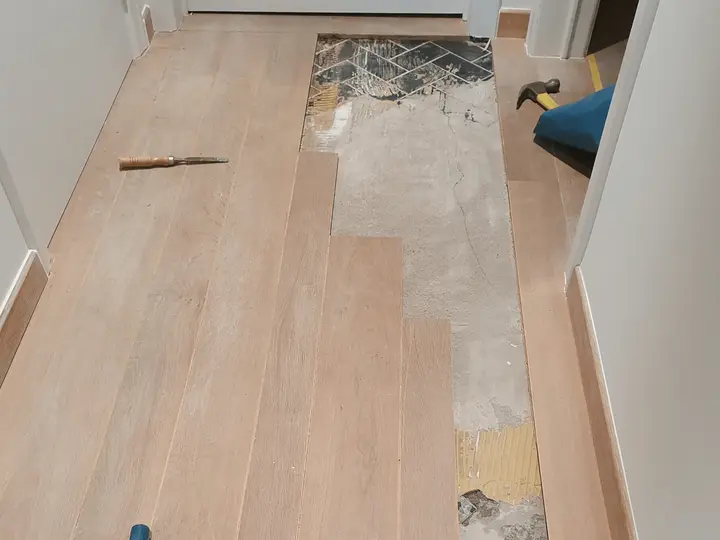
- The floor has dents, damaged boards or open joints.
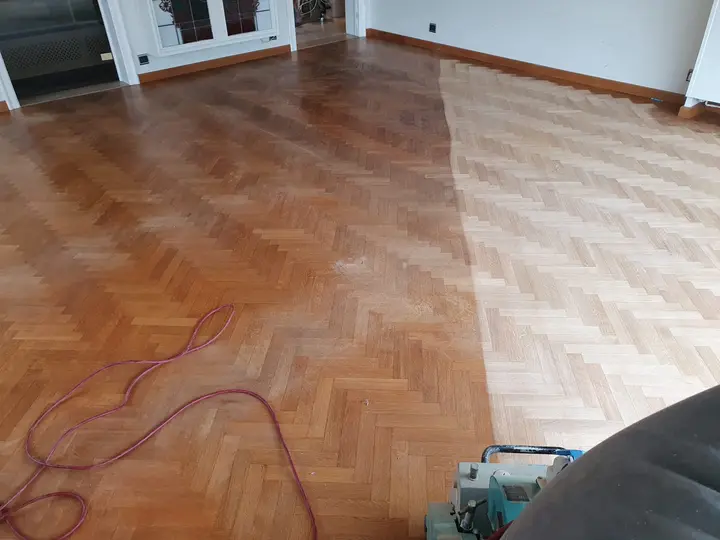
Then a repair or a full sanding is the answer. Janssen Parketvloeren sands and repairs parquet. Polish, maintenance oil and refresh products are available in the webshop.