
What not to use on parquet, and which products never to mix
Why water, vinegar, steam cleaners and all-purpose cleaners damage parquet, and which combinations of cleaning products are dangerous.
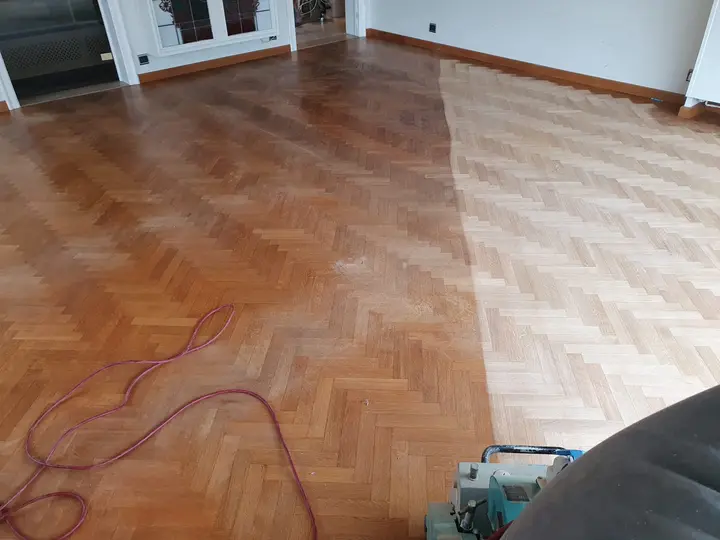
Many household tricks that work fine on tiles or in the kitchen do a wooden floor no good. Sometimes the damage only shows months later: a dull haze, grey joints, a sticky layer or a finish that starts to peel. Here is what to avoid, and why.
Too much water
Wood absorbs water and swells. A soaking wet mop or a bucket of water across the floor lets moisture seep into the joints and board edges. The result: raised edges (cupping), grey or black discolouration and, eventually, a finish that comes loose. So always use a well wrung-out mop and never leave puddles.
Vinegar and other acids
Water and vinegar is cheap and popular, but not suitable for parquet. Vinegar is acidic. On a lacquered floor it gradually attacks the lacquer, so the sheen disappears and the floor turns dull. On an oiled floor it strips the protective oil and soap from the wood, so the floor picks up dirt and stains more quickly. The same goes for lemon juice and other acidic descalers.
Other products to avoid
- Steam cleaners: heat and steam get into the joints and the wood and can damage both finish and adhesive.
- All-purpose cleaners and strong degreasers: often too aggressive. They can strip oil or leave a haze on lacquer.
- Ammonia and bleach: discolour the wood and attack the finish.
- Products with silicones, wax or shine agents not made for parquet: they build up a slick, greasy layer that makes the floor slippery, holds dirt and can stop new lacquer or oil from bonding later.
- Scouring pads, steel wool and abrasive creams: scratch the finish.
- Furniture spray on the floor: makes it slippery and leaves a film.
- Soap for oiled floors on a lacquered floor, or polish on an oiled floor: the wrong match for the finish, leading to streaks or a layer that is hard to remove.
Choose a product that is explicitly made for your type of finish and follow the dosage on the pack.
Never mix cleaning products
Apart from your floor, there is an important safety point: some cleaning products form toxic gases or liquids when combined. Never mix products, not even to make them stronger, and do not use them one after the other in the same spot without rinsing in between. Dangerous combinations include:
- Bleach and ammonia: forms chloramines, which seriously irritate the airways.
- Bleach and acids such as vinegar, citric acid or some toilet cleaners and descalers: forms chlorine gas.
- Bleach and alcohol, such as rubbing alcohol: can form chloroform and other harmful substances.
- Hydrogen peroxide and vinegar: forms peracetic acid, which harms skin, eyes and airways.
- Different drain cleaners together: can react violently.
Because a label does not always tell you what is in a product, the safest rule is simple: one product at a time, as directed on the label, in a well-ventilated room. If you get stinging eyes, a cough or shortness of breath after cleaning, go outside into fresh air and, if symptoms persist, contact a doctor or the Belgian Poison Centre (070 245 245).
Also unwise
- Rubber mats or rug underlays of unknown material: some rubbers discolour lacquer and oil. Choose an underlay suitable for wooden floors.
- Tape stuck directly on the floor, especially on a fresh finish: it can pull the finish off when removed.
- Dragging heavy objects across the floor: always lift them.
So what should you use?
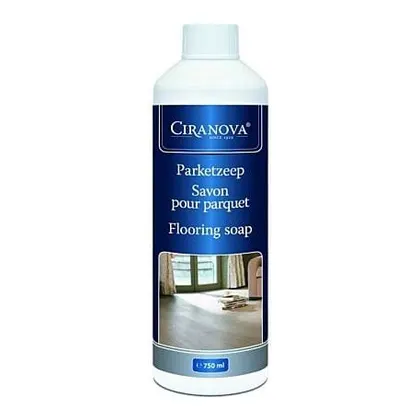
Dry cleaning with microfibre or a vacuum cleaner, damp cleaning with a well wrung-out mop and a parquet soap or cleaner that matches your finish. That is all a wooden floor needs day to day. The webshop has soaps and cleaners for oiled and lacquered floors. Has the finish already been damaged by the wrong products? A sanding can give the floor a fresh start.