
Protecting your parquet from furniture, building work and sun
Felt pads, chair mats, rug underlays and protective fleece: how to prevent scratches and dents from furniture, moving, painting and sun.
Much of the damage to wooden floors does not come from foot traffic, but from furniture, house moves and work in the home. A few simple measures prevent scratches, dents and stains, and keep a repair or a sanding at bay for a long time.
Furniture and chairs
Unprotected legs grind sand and grit into the finish. Heavy furniture can leave dents, especially in softer species. The solution starts with good floor protectors under every leg.
- Felt is the best choice for wooden floors. Choose thick, dense felt that covers the whole foot of the leg.
- Self-adhesive felt is quick to fit but comes off easily. For chairs that are moved a lot, felt caps or glides fixed into or around the leg work better.
- Rubber and hard plastic glides belong on carpet, not on wood. Rubber can also stain lacquer and oil.
- Check the felt regularly. Sand gets stuck in it and worn felt turns hard. Replace it in time, a few times a year in busy places such as the dining table.
- For heavy cabinets and sofas, choose wider legs or coasters to spread the weight over a larger area.
Office chairs on castors
Hard castors grind grit into the floor and quickly wear a dull patch. Replace them with soft castors made for hard floors, or put a clear chair mat under the desk. It protects the wood and you can still see the floor through it.
Rugs
- Use an anti-slip underlay suitable for wooden floors. Some rubber or PVC underlays react with the finish and leave discolouration.
- After a new coat of lacquer or oil, wait the period stated by the manufacturer before putting rugs down. While the finish is still curing, a rug can leave marks.
- Put runners in hallways and where people turn a lot, such as in front of the kitchen counter.
- Move rugs around now and then. Wood changes colour in light, less so under a rug, and you would later see a rectangle.
Sunlight
All wood species change colour in light: oak usually becomes warmer and darker, while other species may fade. This is normal. To slow the process or keep it more even, use curtains or blinds during strong sunlight and move furniture and rugs from time to time.
Moving house and moving furniture
- Always lift furniture. Dragging it, even over a short distance, nearly always leaves marks.
- For heavy items, use furniture dollies with soft wheels, or slide them on a sturdy board or an old rug turned upside down.
- Cover the removal team's walking route, especially in wet weather.
During painting and renovation work
When work is going on, paint, plaster, debris and sometimes tools end up on the floor. Protect it as well as you can, but in the right way.
- Use a breathable protective fleece, ideally with an anti-slip underside. It catches paint splashes and dirt without trapping moisture.
- Do not use plastic sheeting for long periods. Moisture can get trapped underneath and cause stains or discolouration.
- Never put tape directly on the floor, certainly not on a freshly finished one. Tape the fleece sheets to each other, not to the parquet.
- On heavily used routes, add rigid boards on top of the fleece, for example under ladders and scaffolding.
- After the work, first clear all dust and debris off the fleece before rolling it up, so it does not fall onto the floor.
- Let a freshly finished floor cure fully before covering it or putting heavy loads on it.
Pets and children
- Keep dogs' and cats' claws short.
- Put food and water bowls on a waterproof mat.
- Lay a play mat where children play with hard toys.
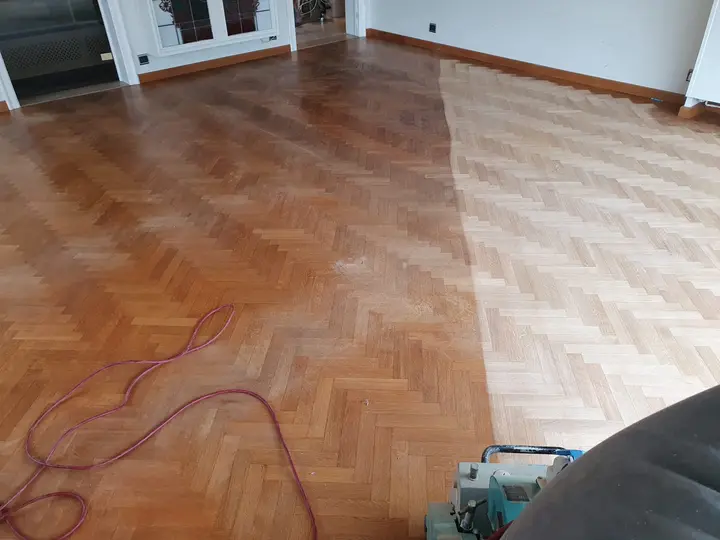
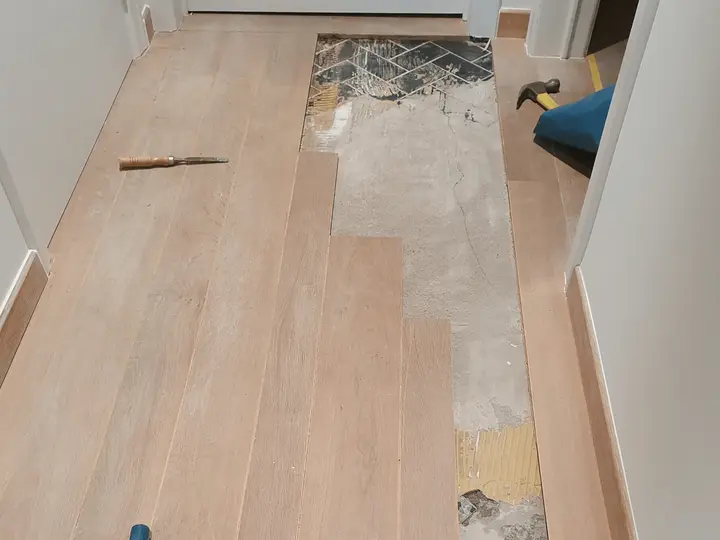
Damage after all? Small scratches can often be touched up yourself. For dents, damaged boards or a floor affected in many places, you can count on Janssen Parketvloeren for repairs and sanding. Care and repair products are available in the webshop.